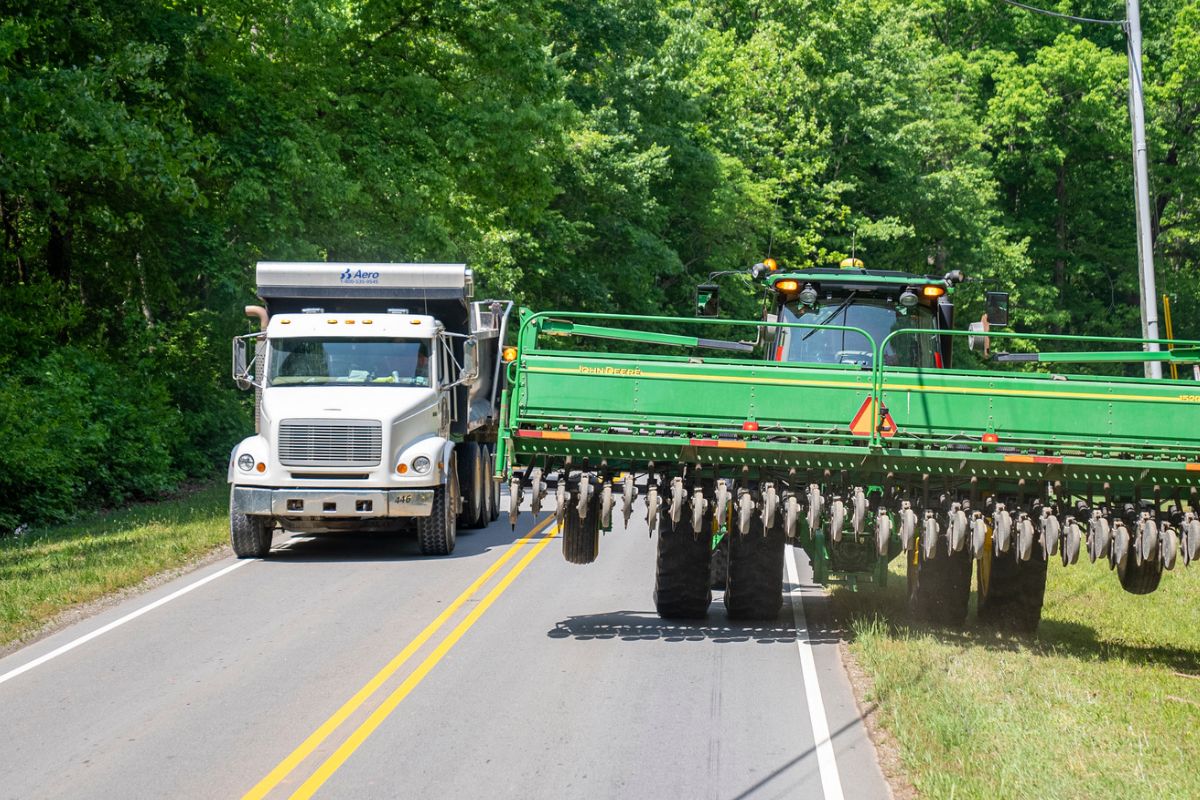
If you’ve spent much time driving through rural Northwest Indiana, chances are you’ve encountered a tractor or another piece of farm equipment on the road. Maybe you’ve found yourself following one at 20 mph, or perhaps you’ve rounded a bend and spotted a large piece of machinery coming toward you.
That second situation can be especially tricky. When a tractor or combine takes up much of a narrow country road, what should you do?
Here in Lake County, sharing the road with farm equipment is part of living in an agricultural community. Understanding why these machines need extra room and how to respond when you encounter them can help keep everyone safer.
Farm Equipment on Northwest Indiana Roads Throughout the Year
Different seasons bring different jobs on the farm. Here’s some of the equipment you might encounter traveling between fields, farms, and other locations throughout the year.
Spring: Planting Equipment
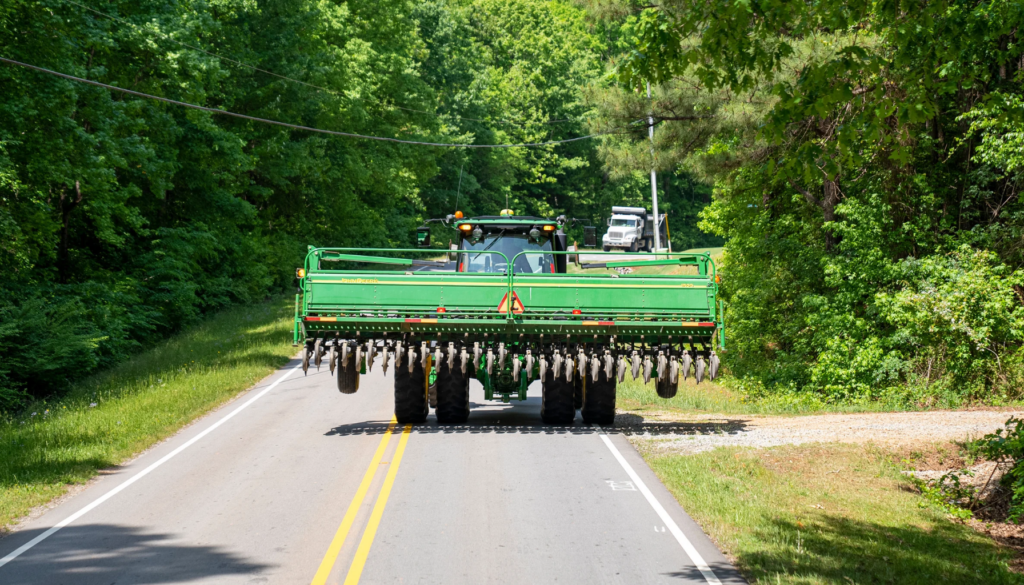
When fields are ready for planting, tractors pulling planters, tillage equipment, and other machinery are frequently on the move. Some implements fold up for transport, but they can still take up considerable space on a narrow road.
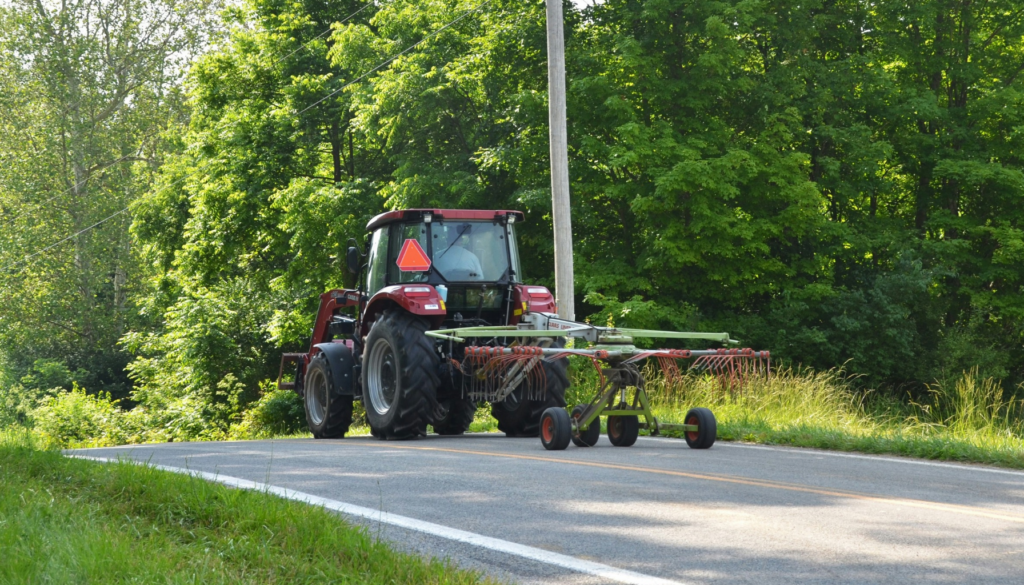
Summer: Hay and Crop Maintenance
Summer brings tractors, mowers, hay balers, and other equipment traveling between fields. Depending on the operation, you might also encounter sprayers or trucks transporting agricultural supplies.
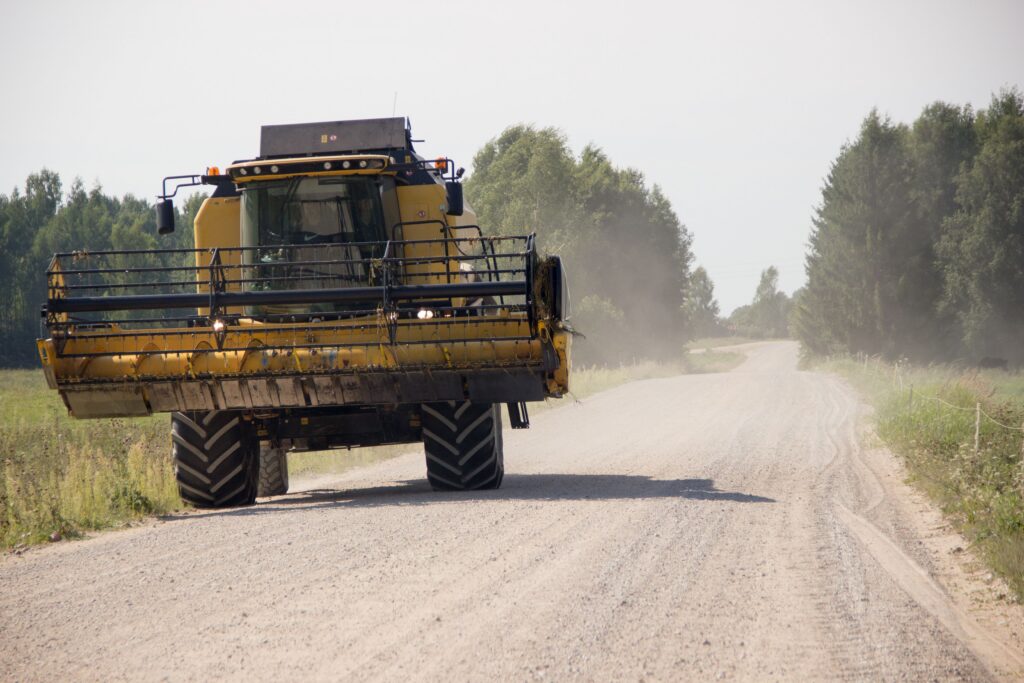
Fall: Harvest Equipment
Harvest is often the busiest season for farm machinery on local roads. Combines, tractors pulling grain carts or wagons, and trucks hauling crops move between fields and grain-handling facilities.
Some of this equipment is particularly large, making it important for approaching motorists to pay attention to the available road space.
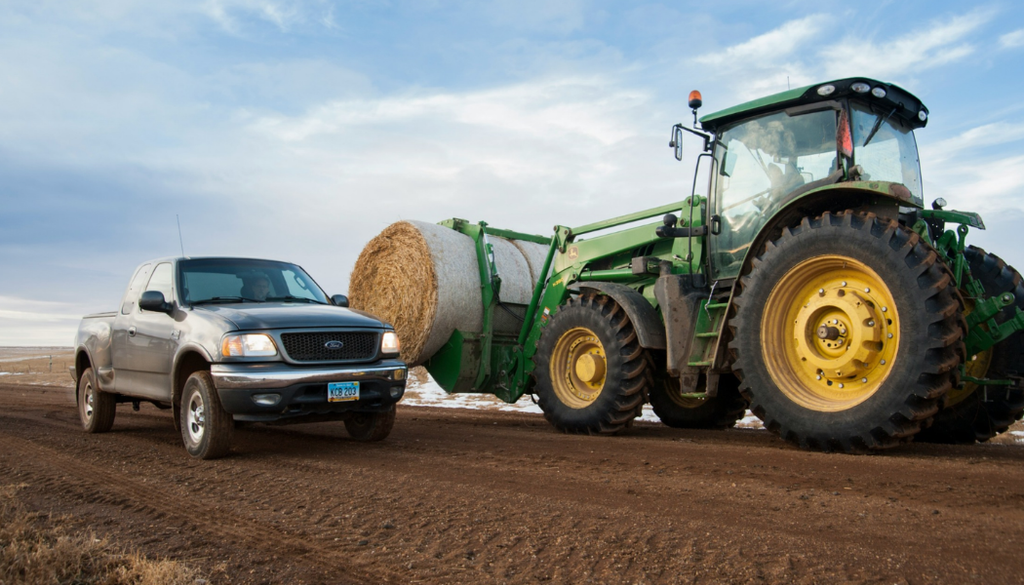
Winter: Farm Operations Continue
Winter generally brings less field equipment onto the roads, but farming doesn’t stop when the temperature drops. Livestock operations still need feed and supplies, and some farms move machinery between locations throughout the colder months.
Why Farm Equipment Needs More Room Than You Think
Ever wondered why a farmer driving a large tractor doesn’t simply move over when another vehicle approaches?
Sometimes, there’s nowhere safe to go.
Many Northwest Indiana country roads have:
- Narrow shoulders
- Drainage ditches
- Mailboxes
- Soft ground along the edges
Large agricultural machines may be wider than a single traffic lane, and moving too far right could put the equipment, its operator, or other motorists at risk.
Farm machinery also handles differently from passenger vehicles. On some large sprayers, even equipment folded for transport can obstruct the operator’s view. Heavy, loaded machines may also need more time and distance to stop.
Purdue University’s Fred Whitford and his colleagues explore these challenges in Keep the Spray Rig on the Road and Out of Trouble, including how narrow roads and roadside obstacles complicate transporting agricultural equipment.
The important thing for motorists to understand is that a farmer may not be able to move over as easily as you can. Sometimes, the safest solution is for the approaching driver to slow down or find a safe place to wait.
What to Do When Farm Equipment Is Coming Toward You
Imagine you’re driving down a two-lane country road when you see a large tractor approaching. Its equipment extends close to the centerline, and there’s a drainage ditch along your side of the road.
What’s the safest response?
There isn’t one maneuver that works for every situation. Road width, visibility, traffic, and the size of the machinery all make a difference. But a few thoughtful driving habits can help.
1. Slow down early.
As soon as you recognize large equipment approaching, reduce your speed. This gives you more time to judge the available space and decide how to respond.
2. Move safely to the right.
Give the equipment as much room as you safely can while remaining on a stable, usable part of the roadway. Don’t risk driving into a ditch or onto a soft shoulder just to make room.
3. Look for a safe place to wait.
Depending on the road, a suitable pull-off or driveway entrance may provide room for the machinery to pass. Use good judgment, and avoid stopping somewhere that creates another hazard.
4. Be prepared to stop.
If there isn’t enough room for both vehicles to pass safely, don’t try to squeeze through. Slow down and stop in a safe location, allowing the equipment to pass when conditions permit.
5. Stay alert and make your actions predictable.
Watch the equipment’s movements, avoid sudden maneuvers, and don’t assume the operator can see everything around the machine.
The goal isn’t to memorize a complicated set of rules. It’s to recognize that large machinery needs room, that both drivers may need to slow down or stop, and that safe decisions depend on the road and conditions.
What If You’re Traveling Behind Farm Equipment?
Of course, approaching farm equipment isn’t the only situation drivers encounter.
If you’re following a tractor or combine, maintain a safe distance and resist the temptation to pass at the first opportunity. Large machines may make wide turns into fields or driveways, and a farmer moving toward the right side of the road might actually be preparing to turn left.
Pass only when it’s legal, visibility is clear, and you have enough room to complete the maneuver safely.
Remember that many farm vehicles travel at 25 mph or less. A little patience can prevent a dangerous situation.
For additional guidance, the Indiana State Police offers farm equipment driving safety tips for motorists traveling rural roads.
Good Neighbors Make Safer Roads
Farmers and motorists share the same roads, and everyone has places to be. Farmers out on the road are going to work just like you are, and they also want to reach their destination on time and in good health.
The next time you encounter a large piece of farm equipment on a Lake County road, keep in mind that the operator may have limited options for moving over. Slowing down, paying attention, and allowing extra space can make the encounter safer for both of you.
After all, these are our neighbors, and we’d all like to get home safely.
Want to stay connected with what’s happening in Northwest Indiana agriculture? Follow Lake County Farm Bureau on Facebook for local farming news, community education, and updates.